

Choosing a business CCTV camera
Crime and security risks vary across industries, but one thing is clear—businesses without adequate surveillance are far more vulnerable. Choosing the right CCTV system is essential for protecting your premises, staff, and assets.
The fight against crime is unfortunately a threat to our way of life. The UK home office regularly carry out a survey called (Commercial Victimisation Survey), the survey was put in place to monitor crime trends and to identify areas of improvements. In addition to improvements made by the home office, for additional peace of mind business owners can install CCTV Cameras to improve security on the premises. So, How do I choose a CCTV Camera for business?
The Role of CCTV in Protecting Business Premises

– Source: Home Office, 2023 CVS data tables
As illustrated in the diagram, certain areas are more vulnerable than others. This highlights the importance of strengthening your security measures to better protect your business. We explore how to choosing the right CCTV cameras for your business can help in crime prevention.
What is CCTV?
CCTV (closed-circuit television), also known as video surveillance. The video cameras are used to transmit video signal to a specific place on a limited set of monitors. CCTV’s can be used to monitor activity at home or business. Prior to the advancement of technology, the footage was recorded to VHS. New digital technology allows you to store the video footage on a hard drive or cloud storage. In addition, the new technology allows you to link the CCTV footage to your mobile phone or laptop. This feature has been extremely beneficial to consumers, allowing property owners to check up on their property while away.
Types of CCTV systems
There are several CCTV’s available, each CCTV camera is design for a specific requirement. For example, Infrared/night vision cameras have the ability to capture footage in complete darkness. This type of camera may be useful to banks, farms, and manufacturing plants. Although there are a lot of options in terms of which camera to choose, they all work on similar systems. IP Cameras, Wired system, and Wireless system.
Types of CCTV Cameras
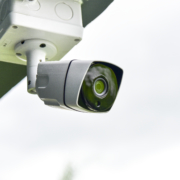
- Bullet CCTV camera – Ideal for outdoor use as a visible deterrent with long-range viewing.
- Dome CCTV camera– Best for indoor environments like offices and retail spaces where a discreet appearance is preferred.
- C-Mount CCTV camera– Best for long-range, surveillance requiring interchangeable lenses, such as large warehouses, industrial estates, or perimeter fences.
- PTZ (Pan, Tilt, Zoom) CCTV camera– Best for active, large scale surveillance with high flexibility, such as stadiums, parking lots, warehouses, and perimeters.
- Day/Night CCTV camera – Best for 24/7 security in areas with changing light, such as outdoor driveways, parking lots, and building entrances
- Network/IP CCTV camera– Best for high-definition surveillance requiring superior image detail, remote access, and scalable installations
- Wireless CCTV camera– Best for renters, quick DIY installations, and covering spots where running cables is difficult,
- HD (High Definition) CCTV camera– Best for applications requiring clear, detailed evidence, such as facial recognition, vehicle identification (license plates), and monitoring high-risk areas.
CCTV Camera Systems
Wired Systems: Commonly found in large premises such as warehouses, shopping centres and stadiums. The wired system runs off a mains power supply, this CCTV system will connect a camera directly to a recorder, the recorder is then connected to a router which transmits the video signal to its required destination. Furthermore, the signals can be transmitted internally and externally.
Wireless Systems: A Wireless system is often used in homes or small businesses. As the name suggests all connections are wireless. The cameras transmit video signals over radio bands to a receiver with an inbuilt hard drive, additionally, sine receivers will upload directly to the cloud. Monitors connected to the receiver can display live feeds.
IP Cameras: IP stands for Internet protocol. IP cameras are designed similar to a standard webcam. The camera receives and transmits video data over a network or the internet, in some cases it’ll use both. The difference between a webcam & IP camera is an IP camera operates as a standalone device with a unique IP address. Lastly, its important to realise that both these cameras can be used on a wired system or a wireless system.
How to Choose the Right CCTV Camera for Your Business
When choosing a CCTV camera, consider where it will be installed (indoor or outdoor), the camera type (bullet, dome, turret or PTZ), and the resolution needed for clear images, especially for identifying people or vehicles. Ensure it has suitable night vision, an appropriate field of view for the area you want to cover, and reliable motion detection with alerts. Decide between wired cameras for stability or wireless for easier installation, choose how footage will be stored (cloud, local, or both), and look for useful smart features such as mobile app access or AI detection, while balancing all of this with your budget and security needs.
Key factors when choosing a camera:
- Resolution (image quality)
- Coverage area (small office vs warehouse)
- Indoor vs outdoor use
- Night vision capability
- Storage (cloud vs local DVR/NVR)
- Remote access (mobile viewing)
- Compliance (GDPR)


